
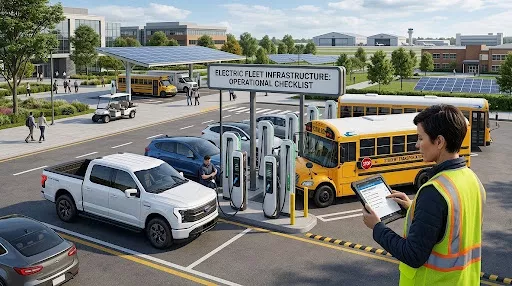
A successful EV fleet starts with infrastructure planning, not charger shopping. So, assess your vehicles, routes, dwell times, electrical capacity, utility needs, the site layout, total costs, safety aspects, and future growth, before you pick the charging equipment.
A school, airport, and corporate campus may all need EV charging. Their infrastructure needs can be very different. So, use this electric fleet infrastructure checklist to identify what your site needs before construction or equipment procurement begins.
Start with two things: fleet operations and electrical capacity.
Document each vehicle is daily mileage, routes, departure times, return times, energy needs, and parking location. Then determine how much electrical capacity the site has today and how much charging could add to the load.
DOE guidance recommends considering fleet duty cycles, vehicle models, garaging locations, charging needs, and peak demand when planning fleet charging.
This information helps determine how many chargers you need and how much power they must deliver.
Do not assume existing electrical capacity will support your fleet. So, review:
A site assessment or load study can reveal whether upgrades may be necessary. DOE is EVI-LOCATE resources consider factors such as transformer capacity, existing load, panel capacity, wiring, and trenching when evaluating charging sites.
The goal is simple: understand existing capacity, projected charging load, required upgrades, and likely project scope before buying equipment.
Contact the utility early. Ask about:
Early coordination can prevent an expensive redesign. DOE specifically recommends working with utilities to understand charging requirements, electrical demand, pricing, infrastructure upgrades, and future expansion.
Do not automatically choose the fastest charger. Match charging power to:
Vehicle needs + dwell time + operating schedule + available electrical capacity.
Level 2 charging may work well when vehicles remain parked for several hours. DC fast charging can make more sense when vehicles have short turnaround windows.
An airport shuttle running throughout the day has different requirements from a school vehicle parked overnight.
The right question is not, "How fast can we charge?"
It is, "How much energy must each vehicle receive before its next assignment?"
Your project budget should cover more than chargers. Review:
Charger placement should also support vehicle flow, pedestrian safety, emergency access, cable management, and future expansion. DOE fleet guidance highlights site location, accessibility, safety, electrical proximity, weather, and expansion planning as important considerations.
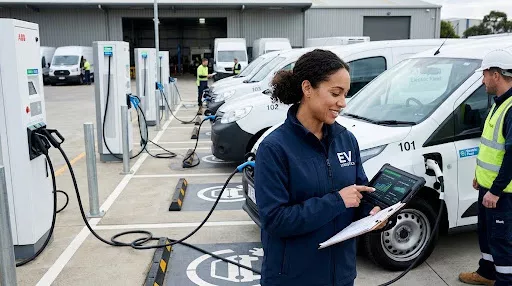
Multiple vehicles charging simultaneously can create significant electrical demand.
Charging management can help coordinate charging schedules, balance loads, monitor energy use, identify faults, and prioritize vehicles.
Also involve your IT team to review:
DOE recommends coordination among fleet, facilities, energy, IT, cybersecurity, and utility teams when implementing smart charging.
| Site | Main Planning Priority |
|---|---|
| Schools | Overnight charging, predictable schedules, safety, and fleet replacement planning |
| Airports | High utilization, turnaround time, redundancy, security, and operational continuity |
| Corporate Campuses | Mixed vehicle schedules, fleet priorities, employee charging, and building loads |
Schools may benefit from predictable overnight charging.
Airports may need greater charging flexibility because vehicles can operate across multiple shifts.
Corporate campuses may need to separate fleet charging from employee or visitor charging so competing demand does not disrupt fleet operations.
Do not build your budget around charger prices alone. Consider:
We, at Fairway EV, consider commercial EV fleet services, maintenance, rentals, commercial electric trucks and delivery vehicles, upfitting, accessories, incentives, and more for determining power needs for EV chargers.
Incentive programs vary by location and can change. Verify eligibility before including an incentive in your financial model.
Futureproofing does not mean installing unused chargers today.
Instead, consider preparing electrical capacity, conduit routes, parking layouts, and other infrastructure for expansion when the business case supports it.
Before approving your project, confirm:
An EV charging project works best when infrastructure follows real operating requirements. Assess the fleet first. Confirm electrical capacity. Involve the utility. Then design the charging system around actual routes, dwell times, safety needs, costs, and growth.
For organizations evaluating commercial EV fleet needs, Fairway EV offers commercial EV fleet maintenance, rentals, commercial electric trucks and delivery vehicles, vehicle upfitting, and EV equipment and accessories.
Plan the infrastructure before you purchase the chargers.
The answer depends on fleet size, energy use, dwell time, routes, charging power, and operating schedules. A site assessment should determine the practical charger quantity.
No. Fleets with long parking periods may use Level 2 charging effectively. Faster charging makes more sense when vehicles have short turnaround times.
A load study helps determine available electrical capacity, expected charging demand, and potential upgrades before equipment or construction decisions are finalized.
Yes. Early utility coordination can identify service requirements, capacity limitations, rates, upgrades, and potential programs that may affect project planning.
Schools should focus on predictable charging windows, overnight dwell time, safety, fleet schedules, and future vehicle replacement cycles.
Plan future electrical capacity, conduit pathways, charger locations, software, and utility requirements while installing only the equipment supported by today is business case.
Diversity Supplier Participant





© Fairway EV. All rights reserved